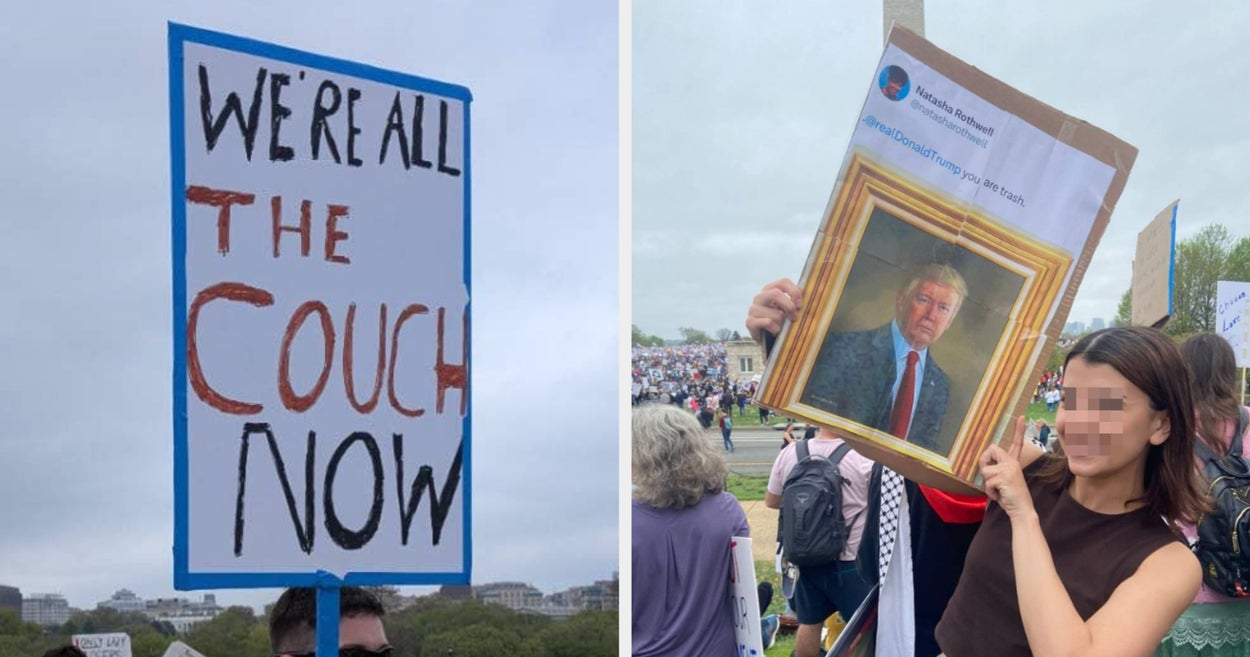
Beyond Banners: The Wit and Humor of Anti-Trump Protest Signs
In the vibrant tapestry of political dissent, few elements capture the public imagination quite like a well-crafted protest sign. During the Trump presidency, these impromptu canvases became a potent medium for expressing everything from frustration and anger to profound disappointment. Yet, what often stood out, transforming fleeting moments of protest into enduring cultural touchstones, was their undeniable wit and humor. These signs, far from being mere statements, evolved into visual punchlines, biting satire, and clever wordplay that resonated globally, often transcending the physical street to become widely shared Anti Trump Memes online.
The streets, rally after rally, bore witness to an explosion of creativity. Handmade signs, meticulously painted posters, and even cleverly modified objects served as a collective commentary on policy, personality, and perception. This article delves into the unique power of humor and satire in anti-Trump protest signs, exploring how they not only communicated grievances but also fostered solidarity, sparked conversations, and ultimately contributed to a rich canon of digital protest art.
The Art of the Protest Sign: More Than Just Words
A protest sign is, at its core, a distillation of complex emotions and ideas into a concise, impactful visual. In the context of anti-Trump demonstrations, these signs often succeeded by employing humor as a strategic tool. Humor disarms, it invites a second look, and crucially, it makes a message more memorable. When faced with a sea of traditional banners, a sign that elicits a chuckle or a knowing smile stands out, breaking through the noise and demanding attention.
- Sarcasm and Irony: Many signs leveraged subtle (or not-so-subtle) sarcasm. Phrases like "Make America Smart Again" played directly on Trump's slogan, twisting its meaning to critique perceived intellectual shortcomings or policy decisions.
- Pop Culture References: Drawing from movies, TV shows, and music provided instant relatability. A sign declaring "The Handmaid's Tale is not an instruction manual" immediately connected with a broad audience concerned about women's rights, using a familiar cultural touchpoint to amplify its message.
- Puns and Wordplay: The linguistic gymnastics on display were often brilliant. From signs warning against "Trumponomics" to those demanding "No More B.S." (referring to both literal bovine scat and political nonsense), the clever use of language was a hallmark.
- Direct, Humorous Criticism: Some signs went for direct critiques, but with a humorous twist. References to "tiny hands," often playfully accompanied by equally tiny props, became a recurring visual gag that both mocked and undermined the image of power.
These signs didn't just state opposition; they reframed the narrative, often using the opponent's own words or perceived weaknesses against them in a way that was both accessible and shareable. This inherent shareability made them prime candidates for becoming viral Anti Trump Memes.
From Cardboard to Clicks: Protest Signs as Viral Content
The digital age transformed the lifespan and reach of protest signs. What once might have been seen by a few hundred people on a city street now had the potential to be viewed by millions worldwide. Social media platforms became the primary conduits, amplifying the cleverest, funniest, and most poignant signs far beyond the protest line.
A sign created on a piece of cardboard in Washington D.C. could be photographed, uploaded to Twitter, Instagram, or Reddit, and within hours, become a widely shared image. This process often involved:
- Screenshotting and Re-sharing: Users would capture images of particularly impactful signs and repost them, often adding their own commentary, contributing to the sign's second life as an Anti Trump Meme.
- Memeification: The most iconic signs weren't just shared; they were often altered. Text might be changed, new backgrounds added, or elements from other popular memes incorporated. This iterative process cemented their status as true internet memes, evolving and adapting across various digital contexts.
- Community Building: The sharing of these signs, particularly the humorous ones, fostered a sense of community and shared purpose among like-minded individuals online. Laughter, even in protest, is a powerful unifier.
The symbiotic relationship between physical protest and digital virality is clear. A witty sign isn't just a physical artifact; it's a piece of performative art designed for maximum impact, both in person and online. For a deeper dive into this phenomenon, explore The Rise of Anti-Trump Memes: Satire, Community, and Viral Culture.
Crafting Your Own Message: Tips for Impactful Protest Signs (and Digital Memes)
Whether you're planning to march or want to contribute to the online dialogue with your own digital creations, the principles of effective, humorous communication remain the same:
- Keep it Concise and Clear: A protest sign (or meme) has only a few seconds to make an impression. Use strong, active language and avoid jargon.
- Embrace Wit and Humor: Laughter is a powerful tool. It makes your message more accessible, memorable, and often, more persuasive. Think about puns, irony, and unexpected juxtapositions.
- Make it Visually Striking: Use bold colors, legible fonts, and simple, impactful imagery. Even a simple drawing can convey a complex message effectively. For digital memes, ensure high-quality images and clear text overlays.
- Be Original (or Cleverly Adaptive): While referencing existing memes can be effective, truly memorable signs often offer a fresh perspective or a uniquely personal twist.
- Know Your Audience: Tailor your humor and references to resonate with the people you want to reach. What pop culture references will they understand? What shared frustrations can you tap into?
- Consider the Context: A sign's impact can be amplified or diminished by the event it's part of. Ensure your message aligns with the broader purpose of the protest.
The power of satire in protest cannot be overstated. It allows for biting criticism without resorting to aggression, often drawing more people into the conversation. It's a testament to the human spirit's ability to find light even in challenging times, turning frustration into a creative outlet.
The Global Echo: When Protest Signs Cross Borders
The phenomenon of humorous and witty protest signs wasn't confined to American borders. The global political landscape often sees similar styles of dissent emerge, sometimes directly inspired by American activism, and other times evolving independently with similar characteristics. International audiences, witnessing the humor of anti-Trump signs, often found parallels with their own political struggles, adopting similar tactics to challenge their own leaders or policies.
Indeed, the concept of using internet culture and humor for political messaging is not unique to Western democracies. Nations worldwide leverage the power of digital communication, and sometimes, even physical protest signs, to craft narratives. The understanding of how these messages resonate across cultures highlights the universal language of satire and dissent. For an example of how this plays out in a geopolitical context, consider the tactics explored in Geopolitics of Memes: Iran's Anti-Trump Propaganda Tactics.
The universal appeal of a sharp, humorous message meant that many Anti Trump Memes originating from protest signs were easily understood and appreciated across different languages and cultural backgrounds. The specific context might change, but the underlying sentiment of challenging authority through wit often remained the same.
The enduring legacy of anti-Trump protest signs lies not just in their immediate political impact, but in their contribution to a vibrant cultural archive of dissent. They demonstrate that humor is not a trivialization of serious issues but a powerful amplifier, a disarming weapon, and a universal language that can unite, inform, and inspire. From the streets to our screens, these clever creations continue to remind us of the enduring power of creative resistance and the profound connection between physical protest and the digital world of Anti Trump Memes.